- Supporting Nigeria’s National Action Plans (NAPs)
- Empowering Gender Focal Persons
- Localization of UNSCR 1325
- Media and Advocacy for WPS
- Youth Empowerment
- Partnerships and Global Impact
- Mediation, Interest-Based Negotiation, and Early Warning Trainings
The Gender, Women, Peace, and Security (GWPS) program of WANEP–Nigeria serves as the institutional mechanism for advancing gender equality, women’s empowerment, and inclusive peacebuilding across the country. The Desk is dedicated to promoting the effective implementation of the Women, Peace, and Security Agenda in line with United Nations Security Council Resolution (UNSCR) 1325 and related resolutions, while also ensuring that gender perspectives inform all levels of conflict prevention, peacebuilding, and development programming.
The GWPS Desk provides leadership in gender mainstreaming, ensuring compliance with WANEP–Nigeria’s gender policy and alignment with both national and regional frameworks, including Nigeria’s National Action Plans (NAPs) and State Action Plans (SAPs) on UNSCR 1325. Its core mandate encompasses policy advocacy, stakeholder engagement, capacity development, research, and technical support to partners, state institutions, and civil society actors working toward inclusive and sustainable peace.
WANEP–Nigeria’s GWPS interventions have led to significant progress in the institutionalization of gender-responsive peacebuilding mechanisms at the national, state, and community levels. Through sustained advocacy and multi-stakeholder partnerships, the organization has supported the domestication and implementation of the Violence Against Persons (Prohibition) Law, facilitated the development and review of multiple State Action Plans, and strengthened the capacities of over 2,000 stakeholders, including community leaders, women peacebuilders, gender focal persons, and security actors. These efforts have enhanced women’s participation in decision-making, mediation, and early warning processes while advancing protection and prevention outcomes for vulnerable populations.
The GWPS Resource Hub is a centralized platform for practitioners, policymakers, and partners seeking evidence-based tools and knowledge products to advance gender-responsive peace and security interventions. The Hub provides access to key documents such as Nigeria’s National State Action Plans and Local Action Plans (LAPs), the VAPP Law and its localized versions, as well as directories of Sexual Assault Referral Centres (SARCs), research reports, policy briefs, and multimedia learning materials. It serves as a one-stop reference point for strengthening coordination, accountability, and innovation in gender and peacebuilding practice.
Nigeria: National Action Plans (NAPs) on Women, Peace and Security
Nigeria has developed three National Action Plans (NAPs) to implement United Nations Security Council Resolution 1325 (UNSCR 1325) on Women, Peace and Security (WPS). These plans, adopted in 2013, 2017–2020, and the Third NAP (2025–2029), set out Nigeria’s national strategies for promoting women’s participation in peacebuilding, preventing gender-based violence, and ensuring the protection and recovery of women and girls affected by conflict.
Objectives and Structure of the NAPs
Each NAP is anchored on five strategic pillars, which align with global and regional WPS frameworks:
First National Action Plan (NAP I) – 2013–2016
The first NAP focused on establishing Nigeria’s initial framework for implementing UNSCR 1325. It defined five pillars as guiding priorities:
- Prevention
Strengthen women’s roles in conflict resolution, promote a culture of peace, improve early warning and early response systems, conduct research and documentation, and support gender-responsive legal reforms. - Participation
Train women and girls as mediators, negotiators, and peacebuilders; promote their inclusion in all levels of peace processes and security institutions; and involve men and youth in WPS awareness. - Protection
Build resilience among women and girls against sexual and gender-based violence, promote socio-economic empowerment, and ensure access to humanitarian services in post-conflict settings. - Promotion
Conduct large-scale awareness campaigns on UNSCR 1325, 1820, and 1889; intensify advocacy against harmful traditional practices; and promote collaboration among government, civil society, and media. - Prosecution
Establish special courts to address GBV cases, foster collaboration between police and social workers in prosecution, and strengthen transitional justice mechanisms.
Second National Action Plan (NAP II) – 2017–2020
Pillar 1: Prevention and Disaster Preparedness
Focuses on preventing conflict and violence against women and girls, building resilience, and establishing systems for early warning, response, and disaster mitigation.
Pillar 2: Participation and Representation
Promotes women’s full and equal participation in decision-making, leadership, peace processes, and governance structures related to conflict prevention, peacebuilding, and recovery.
Pillar 3: Protection and Prosecution
Ensures that the rights of women and girls are protected and promoted in situations of conflict and peace, and that violators are effectively prosecuted under national and international law.
Pillar 4: Crisis Management, Early Recovery and Post-Conflict Reconstruction
Addresses the specific relief and recovery needs of women and girls while strengthening their capacity to act as active agents of peace and recovery.
Pillar 5: Partnerships, Coordination, and Management
Serves as a cross-cutting pillar to improve coordination, implementation, monitoring, and reporting mechanisms across all actors and institutions engaged in the WPS agenda.
Context
Since Nigeria’s independence in 1960, the country has faced multiple conflict dynamics, from civil unrest and militancy to insurgency and communal violence, all of which have disproportionately affected women and girls. Incidents of sexual violence, abduction, and displacement have deepened gender inequalities and exposed the need for structured national responses.
The review of the first NAP (2013–2016) and the development of the second (2017–2020) and third (2024–2028) NAPs reflect Nigeria’s efforts to integrate lessons learned, close implementation gaps, and respond to emerging security threats. The current NAP emphasizes local ownership, inclusive governance, and stronger accountability systems, a direction reinforced by civil society and development partners.
Civil Society and Institutional Engagement
The Federal Ministry of Women Affairs serves as the lead coordinating agency for NAP implementation at the national level. However, civil society organizations remain central to the success of the WPS framework in Nigeria, particularly through advocacy, monitoring, and localization of the NAPs into State Action Plans (SAPs).
WANEP-Nigeria, through its Women, Peace and Security (WPS) Unit, has been a core partner in these processes. The organization has:
- Provided technical support and coordination for state-level consultations during NAP II and NAP III development;
- Facilitated capacity-building sessions for gender focal persons, peacebuilders, and government actors to strengthen localized implementation;
- Supported the localization of UNSCR 1325 through community-based action plans in several states; and
- Played a monitoring and advocacy role in ensuring gender compliance and accountability within national peace and security programming.
WANEP-Nigeria also collaborates with the Federal Ministry of Women Affairs, UN Women, and the National Technical Working Group on UNSCR 1325 to ensure alignment between national and state-level frameworks.
UN Peacekeeping and Women’s Participation
As of March 2025, Nigeria contributes approximately 225 personnel to UN peacekeeping missions, including 52 women, positioning the country among the top 50 troop-contributing countries globally.
Nigeria has made measurable progress toward meeting the UN’s 2022 gender engagement targets, achieving 19% representation of women among senior police, staff, and experts, and 9% among deployed troops.
WANEP-Nigeria continues to advocate for the inclusion of women in security institutions, peace mediation processes, and peacekeeping missions as part of its national WPS programming and policy engagement.
Reporting and Accountability
To strengthen transparency and public access, the NAPs are accompanied by monitoring frameworks and accountability channels. WANEP-Nigeria contributes to data collection, progress reporting, and stakeholder validation workshops that track implementation across states.
Stakeholders and partners can access the official NAP documents and related reports through:
STATE ACTION PLANS (SAPS) ON UNSCR 1325
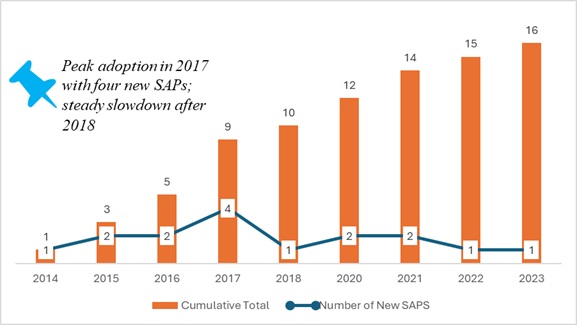
State Action Plans (SAPs) translate Nigeria’s National Action Plan (NAP) on Women, Peace and Security into state-level priorities, costed activities, coordinating structures, and monitoring arrangements. SAPs localize UNSCR 1325 by reflecting each state’s conflict dynamics, needs, and institutional set-up; they also create entry points for budgeting, multi-stakeholder coordination, and community-level peacebuilding. The Federal Ministry of Women Affairs leads NAP coordination at the national level, while civil society, including WANEP-Nigeria, plays a central role in technical support, stakeholder mobilization, capacity building, and monitoring of SAP development and implementation.
WANEP-Nigeria’s WPS Unit has supported SAP development through workshops, technical working groups, and localization exercises in multiple states. WANEP’s guidance and training materials remain a standard reference for SAP development, and the WPS Unit continues to assist states with stakeholder consultations, costing, and monitoring frameworks.
Status of SAP Development Across States
Geopolitical Zone | State | Adoption Year | Implementing/Coordinating Body | Status (as of 2025) |
North Central | Plateau | 2015 | Plateau State Ministry of Women Affairs and Social Development | Being implemented; review under consideration |
Kogi | 2018 | Kogi State Ministry of Women Affairs | Active implementation; CSO coordination ongoing | |
Nasarawa | 2020 | Nasarawa State Ministry of Women Affairs and Social Development | Implementation ongoing; community localization progressing | |
Benue | 2021 | Benue State Ministry of Women Affairs and Social Development | Active; localized actions in Makurdi and Gboko | |
Kwara | 2022 | Kwara State Ministry of Women Affairs | Early-stage implementation; desk established | |
North East | Borno | 2014 | Borno State Ministry of Women Affairs | Operational but requires review post-2020 |
Adamawa | 2017 | Adamawa State Ministry of Women Affairs and Social Development | Active; local peace networks established | |
Gombe | 2017 | Gombe State Ministry of Women Affairs | Active; localized M&E framework in place | |
Yobe | 2020 | Yobe State Ministry of Women Affairs | Functional; implementation through community focal points | |
Bauchi | 2021 | Bauchi State Ministry of Women Affairs | Active; coordination committee established | |
North West | Kaduna | 2016 | Kaduna State Ministry of Human Services and Social Development | Fully implemented; now under review |
Kano | 2016 | Kano State Ministry of Women Affairs | Active; annual WPS consultative forum ongoing | |
Katsina | 2023 | Katsina State Ministry of Women Affairs | Recently launched; domestication stage | |
South South | Rivers | 2015 | Rivers State Ministry of Women Affairs | Operational; SAP review pending |
| Delta | 2017 | Delta State Ministry of Women Affairs | Operational; |
Bayelsa | 2017 | Bayelsa State |
NB : No SAPs verified in the South-West (Lagos, Oyo, Osun, Ekiti, Ogun, Ondo) or South-East (Imo, Anambra, Abia, Ebonyi, Enugu).
LOCAL ACTION PLANS (LAPS)
In recognition of the critical role of grassroots structures in sustaining peace, several states have further decentralized implementation through Local Action Plans (LAPs) on UNSCR 1325. The LAPs operationalize WPS principles at local government and community levels, ensuring that women and marginalized groups actively participate in conflict prevention, mediation, and post-conflict recovery.
LAPs have been successfully developed in selected LGAs across Plateau, Benue, Adamawa, and Kaduna States, with ongoing efforts in Nasarawa, Delta, and Gombe. These LAPs are community-driven, context-specific, and serve as blueprints for local peace committees, security agencies, and women’s networks to collaborate in addressing emerging threats, reporting gender-based violence, and promoting inclusive decision-making.
WANEP–Nigeria has played a pivotal role in facilitating LAP processes in states like Balanga (Gombe), Katagum (Bauchi), and Maiduguri (Borno) by building the capacity of women and local policymakers to implement LAPs aligned with the NAP, through technical guidance, stakeholder coordination, and capacity strengthening of gender desks within ministries and local councils. Through these localized frameworks, the organization continues to bridge the gap between national policy commitments and community realities, ensuring that the Women, Peace, and Security Agenda remains practical, measurable, and inclusive across Nigeria’s diverse regions.
VIOLENCE AGAINST PERSONS PROHIBITION LAW (VAPP LAW)
The Violence Against Persons Prohibition (VAPP) Law is a landmark legal framework first enacted at the federal level in 2015 to comprehensively address all forms of violence, including physical, psychological, sexual, economic, and harmful traditional practices. The law provides robust protection for survivors, establishes justice and referral mechanisms, and enforces penalties for perpetrators, thereby advancing gender justice, safeguarding human rights, and reinforcing Nigeria’s commitment to the Women, Peace, and Security (WPS) Agenda.
As of the most recent update, all 36 states and the Federal Capital Territory (FCT) have domesticated the VAPP Law, except Kano State, which is still in the process of legislative consideration. This widespread adoption marks a significant national milestone in harmonizing legal protections against gender-based violence and other related offenses across Nigeria.
While ownership of the VAPP Law’s domestication and enforcement is a multi-stakeholder effort, involving state assemblies, ministries, civil society organizations, and development partners, WANEP-Nigeria has played a pivotal role in advancing this process. The organization has provided technical support, advocacy, and stakeholder mobilization across multiple states, serving as a key actor in national and subnational coalitions that promote the implementation and sustainability of the law. Through its continuous sensitization campaigns, policy consultations, and coordination with state-level actors, WANEP-Nigeria contributes meaningfully to ensuring that the VAPP Law moves beyond paper into practical enforcement and survivor-centered response mechanisms.
Status of Domestication Across States
State | Legislative Status (Passed/Assented) | Year | Remarks | Primary Implementing Body |
Federal Capital Territory (FCT) | Passed & Assented | 2015 | Early adopter | National Agency for the Prohibition of Trafficking in Persons (NAPTIP) / FCT GBV Response Unit |
Abia | Passed & Assented | 2020 | Domesticated | Ministry of Justice, Abia State (through AG’s Office) |
Akwa Ibom | Passed & Assented | 2020 | Domesticated | Ministry of Justice, Akwa Ibom State |
Anambra | Passed & Assented | 2017 | Domesticated | Ministry of Justice, Anambra State |
Bauchi | Passed & Assented | 2020 | Domesticated | Advisory / Technical Committee for VAPP Implementation – Bauchi State |
Bayelsa | Passed & Assented | 2021 | Domesticated | Ministry of Women Affairs, Bayelsa State |
Benue | Passed & Assented | 2019 | Domesticated | Ministry of Women Affairs, Benue State |
Borno | Passed & Assented | 2022 | Domesticated | Ministry of Women Affairs or State GBV Desk – Borno |
Cross River | Passed & Assented | 2021 | Domesticated | Ministry of Women Affairs, Cross River State |
Delta | Passed & Assented | 2020 | Domesticated | Delta State GBV Management Committee – Ministry of Women Affairs |
Ebonyi | Passed & Assented | 2018 | Domesticated | Ministry of Justice / Women Affairs, Ebonyi State |
Edo | Passed & Assented | 2021 | Domesticated | Ministry of Women Affairs, Edo State |
Ekiti | Passed (GBV Law) | 2019 | Domesticated via GBV law | Ekiti State Gender-Based Violence Secretariat / Ministry of Women Affairs |
Enugu | Passed & Assented | 2019 | Domesticated | Ministry of Women Affairs, Enugu State |
Gombe | Passed & Assented | 2022 | Domesticated | Ministry of Women Affairs, Gombe State |
Imo | Passed & Assented | 2021 | Domesticated | Ministry of Women Affairs, Imo State |
Jigawa | Passed & Assented | 2021 | Domesticated | Ministry of Women Affairs, Jigawa State |
Kaduna | Passed & Assented | 2018 | Domesticated | Ministry of Women Affairs / Gender Desk, Kaduna State |
Kano | Pending | , | Yet to pass or assent | ________ |
Katsina | Passed & Assented | 2023 | Domesticated | Ministry of Women Affairs, Katsina State |
Kebbi | Passed & Assented | 2022 | Domesticated | Ministry of Women Affairs, Kebbi State |
Kogi | Passed & Assented | 2022 | Domesticated | Ministry of Women Affairs, Kogi State |
Kwara | Passed & Assented | 2020 | Domesticated | Kwara State GBV Response Team / Ministry of Women Affairs |
Lagos | Equivalent Law (PDV) | 2007 | Domesticated via alternative law | Domestic & Sexual Violence Agency (DSVA), Lagos State |
Nasarawa | Passed & Assented | 2021 | Domesticated | Ministry of Women Affairs, Nasarawa State |
Niger | Passed & Assented | 2021 | Domesticated | Ministry of Women Affairs, Niger State |
Ogun | Passed & Assented | 2018 | Domesticated | Ministry of Women Affairs, Ogun State |
Ondo | Passed & Assented | 2021 | Domesticated | Ministry of Women Affairs, Ondo State |
Osun | Passed & Assented | 2021 | Domesticated | Ministry of Women Affairs, Osun State |
Oyo | Passed & Assented | 2021 | Domesticated | Ministry of Women Affairs, Oyo State |
Plateau | Passed & Assented | 2022 | Domesticated | Plateau State Gender & Equal Opportunities Commission / WPS Desk |
Rivers | Passed | 2020/21 | Domestication incomplete | Ministry of Women Affairs, Rivers State |
Sokoto | Passed & Assented | 2021 | Domesticated | Ministry of Women Affairs, Sokoto State |
Taraba | Passed (Assent status unclear) | 2022 | Domestication incomplete | Ministry of Women Affairs, Taraba State |
Yobe | Passed & Assented | 2022 | Domesticated | Ministry of Women Affairs, Yobe State |
Zamfara | Passed & Assented | 2023 | Domesticated | Ministry of Women Affairs, Zamfara State |
SEXUAL ASSAULT REFERRAL CENTRES (SARCS)
Sexual Assault Referral Centres (SARCs) provide survivor-centered medical, psychosocial, legal, and protection services for individuals affected by sexual and gender-based violence (SGBV). These centres serve as safe, confidential points of access where survivors can receive immediate care, forensic support, counseling, and structured referrals without stigma or delay.
While SARC establishment involves government agencies, development partners, health institutions, and civil society organizations, WANEP-Nigeria has contributed through advocacy, coordination, support, stakeholder engagement, and linkage to referral pathways. In several states, WANEP-Nigeria has worked alongside partners to strengthen service provision, relief, and recovery survivor access, and capacity-building for frontline responders.
Directory of Sexual Assault Referral Centres (SARCs) in Nigeria
Zone | State | SARC Name | Location / Address | Centre Manager / Contact | Email / Hotline | ||||
NORTH EAST | Adamawa | Hope Centre 1 | ADSACA Building, State Specialist Hospital, Jimeta, Yola | Dr Usha Saxena – 08069710461 | hopecenteryola@gmail.com / 07068339913 | ||||
Adamawa | Hope Centre 2 | General Hospital, Numan | Glory Emmanuel Masei – 08069693771 | ||||||
Adamawa | Women Dev. One-Stop Centre | Women Development Centre, beside High Court, Yola | Adama Yusuf – 08160928282 | adyusuf@unfpa.org / 08002200100 | |||||
Borno | Nelewa Centre | Umar Shehu Ultra-modern Hospital, Maiduguri | Fati Mustapha – 08161838555 | nelewacentre@gmail.com / 08028982947 | |||||
Yobe | Shifa Centre | Women & Children Hospital, Gashua Road, Damaturu | Dr Zainab Ngubdo – 07032917966 | ammihassan14@gmail.com | |||||
Yobe | Potiskum SARC | General Hospital, Potiskum | Dr Abubakar Sadik – 08034453086 | Abuzaks001@gmail.com | |||||
Yobe | Nguru SARC | Federal Medical Centre, Nguru | Dr Oranuka Kingsley Rapulu – 08066991408 | kingoxpli@gmail.com | |||||
Yobe | Gashua SARC | Specialist Hospital Gashua | Bukar Tijjani – 08037686520 | bukartijjani0@gmail.com | |||||
Yobe | Geidam SARC | General Hospital Geidam | Dr Musa Mohammed – 08032109019 | ||||||
NORTH WEST | Kaduna | Salama Centre 1 | Dr Gwamna Awan General Hospital, Kakuri | Nannak Ndam – 08037618661 | salamasarc2017@gmail.com | ||||
Kaduna | Salama Centre 2 | Yusuf Dantsoho Memorial Hospital, Tudunwada | Sidikat Adegboye Bello – 08092877682 | salamacenter19@gmail.com | |||||
Kaduna | Salama Centre 3 | Hajiya Gambo Sawaba General Hospital, Zaria | Aishatu Ahmed – 08034095424 | sarczaria03@gmail.com | |||||
Kaduna | Salama Centre 4 | General Hospital Kafanchan | Grace Yohanna Abbin – 08035869981 | graceyabbin@gmail.com | |||||
Kano | WARAKA Centre | Murtala Muhammad Specialist Hospital, Kano | Dr Nasir Garko – 08065340578 | warakasarckano@gmail.com | |||||
Sokoto | Nana Khadija Centre | Sokoto Specialist Hospital, Sultan Abubakar Road | Asmau Abubakar Jibril – 08063617035 | nanakhadijacentre@gmail.com | |||||
Kebbi | Mai Talle Tara SARC | Kebbi Medical Centre, Kalgo | Safiya Isah – 07063532324 | nanakhadijacentre@gmail.com | |||||
NORTH CENTRAL | Benue | Benue One-Stop Centre (planned) | Federal Medical Centre, Makurdi (establishing phase) |
|
| ||||
Kogi | Kogi SARC (under setup) | Kogi Specialist Hospital, Lokoja |
|
| |||||
Plateau | Plateau State SARC | Plateau Specialist Hospital, Jos |
|
| |||||
Kwara | Ajike Care Centre | General Hospital, Ilorin | Bimpe Sulaiman – 07033033695 | ogsarc21@gmail.com / 08005927272 | |||||
FCT | Awyetu SARC | Bwari General Hospital, Abuja | Dr Bejide Augustine Temitope – 08035712835 | ||||||
FCT | Cece Yara Centre | Salatu Royal Estate, Wuse 2, Abuja | Doyin Shittu – 08096369181 | info@ceceyara.org / 08008008001 | |||||
SOUTH SOUTH | Bayelsa | HALG SARC | 30 Osiri Road, Behind Ekeki Police Station, Yenagoa | Nubani Sorbari Eenee – 08068153456 | snubani@heartlandalliancenigeria.org | ||||
| Rivers | Tamar SARC | Rivers State Ministry of Women Affairs, Port Harcourt |
|
| ||||
| Delta | Asaba SARC | Specialist Hospital, GRA Asaba | Uzama Ifeanyi Valentine – 07030469582 | validrose78@gmail.com | ||||
| Delta | Ughelli SARC | General Hospital Ughelli | Ubiomo Davidson Eferome – 08060466430 | okpunonkemrosemary@gmail.com | ||||
Delta | Warri SARC | Central Hospital Warri | Onoriode Aphia – 08063729559 | onoskolos@gmail.com | |||||
Akwa Ibom | Agape Centre | Immanuel General Hospital, Eket | Anietie Ikpe – 08023009220 | ||||||
Cross River | One-Stop Centre | General Hospital, Mary Slessor Ave, Calabar | Theresa Ukwayi Ungieamgba – 07034912254 | crossriverstateonestopcentre@gmail.com | |||||
SOUTH EAST | Enugu | Tamar SARC (Gov’t) | Family Support Programme Building, Enugu | Evelyn Ngozi Onah – 08068528819 | |||||
Enugu | WACOL Tamar SARC | 9 Dr Mathias Iloh Avenue, New Haven, Enugu | Ijeoma Ezeude – 08038685819 | wacol@wacolnigeria.org / 09091333000 | |||||
Ebonyi | Nduru One-Stop Centre | AE-FUT Teaching Hospital, Abakaliki | Cecilia Elom – 08032774628 | Ebonyisarc2022@gmail.com | |||||
Anambra | Ntasi Centre | General Hospital, Enugwu-Ukwu | Amaka Okoye – 08037904471 | ||||||
SOUTH WEST | Lagos | Mirabel Centre | LASUTH, Ikeja | Joy Shokoya – 07013491769 | sarc@pjnigeria.org / 08155770000 | ||||
Lagos | WARIF Centre | 6 Turton Street, Yaba | Gloria Joacquim – 08033787838 | info@warifng.org / 08092100009 | |||||
Lagos | Idera Centre | Alimosho General Hospital, Igando | Moromoke Babatunde-Martins – 08035935086 | iderasarc@gmail.com | |||||
Ogun | Spring Centre | Oke-Mosan, Abeokuta | Damola Lapite – 08034268616 | ||||||
Ogun | OOUTH SARC | OOUTH, Sagamu | Oluwatoyin Orelaja – 08053144574 | ogsarc21@gmail.com | |||||
Ekiti | Moremi Clinic | EKSUTH Ado Ekiti | Barr. Rita Ilevbare – 08033581144 | ekitisarc@gmail.com | |||||
Ondo | One-Stop Centre | State Specialist Hospital, Akure |
| — | |||||
📖 Compiled by: WANEP–Nigeria Women, Peace & Security Unit
📧 For verification or updates: wanep-nigeria.org@wanep.org
Resource Repository
LOCAL ACTION PLAN (LAPS)
NATIONAL ACTION PLAN (NAP)
NATIONAL ACTION PLAN ON UNITED NATIONS SECURITY COUNCIL RESOLUTION 1325 2024-2028
NATIONAL ACTION PLAN FOR THE IMPLEMENTATION OF UNSCR 1325 AND RELATED RESOLUTIONS IN NIGERIA
NATIONAL ACTION PLAN FOR THE IMPLEMENTATION OF UNSCR 1325 AND RELATED RESOLUTIONS ON WOMEN, PEACE AND SECURITY IN NIGERIA 2017-2020